✓ Art styles are defined by distinct characteristics, techniques, and philosophies.
✓ Understanding art styles enhances appreciation and critical analysis of artworks.
✓ Styles often evolve in response to societal, technological, and philosophical shifts.
✓ Many contemporary artists blend elements from multiple historical art styles.
How It Works
1
Observe & Identify
Begin by closely observing an artwork. Look for recurring patterns, color palettes, brushwork, and subject matter that might hint at its style.
2
Research Context
Investigate the historical period, geographical location, and societal influences surrounding the artwork's creation. This context often sheds light on stylistic choices.
3
Compare & Contrast
Compare the artwork to others from different periods or known styles. Noticing similarities and differences helps solidify your understanding of its unique characteristics.
4
Analyze Techniques
Delve into the specific techniques employed by the artist, such as impasto, chiaroscuro, pointillism, or collage. These technical elements are often hallmarks of particular styles.
The Foundations: Classical and Renaissance Art Movements
Photo: Magda Ehlers / Pexels
To truly grasp the broad spectrum of different types of art styles explained, we must first establish a strong foundation in the classical and Renaissance periods. These eras laid much of the groundwork for Western art and continue to influence artists today. Classical art, predominantly from ancient Greece and Rome, emphasized harmony, order, balance, and idealized forms. Greek sculpture, for instance, perfected the portrayal of the human body with anatomical precision and often depicted mythological figures in heroic poses. The Romans, while drawing heavily from Greek aesthetics, also introduced a strong sense of realism and narrative, particularly in portraiture and grand architectural reliefs that celebrated imperial power. Their engineering prowess also allowed for massive structures like the Colosseum and Pantheon, which served as backdrops for public art. This period's focus on logic, humanism, and the pursuit of perfection set a high standard for subsequent artistic endeavors. The rediscovery of classical texts and artifacts during the Renaissance, meaning 'rebirth,' sparked an unprecedented flourishing of art, science, and philosophy in Europe, primarily from the 14th to the 16th centuries. Artists like Leonardo da Vinci, Michelangelo, and Raphael pushed the boundaries of naturalism, perspective, and emotional depth. Linear perspective, a revolutionary technique, allowed artists to create the illusion of three-dimensional space on a two-dimensional surface, dramatically enhancing realism. Chiaroscuro, the use of strong contrasts between light and dark, became a powerful tool for modeling forms and adding dramatic intensity. The subject matter often revolved around religious narratives, portraiture, and classical mythology, but always with a renewed focus on human experience and individual expression. The High Renaissance, in particular, is renowned for its masterpieces that blend technical mastery with profound emotional and intellectual content. Think of Michelangelo's Sistine Chapel ceiling or Leonardo's 'Mona Lisa.' These artists were not merely craftsmen; they were thinkers, scientists, and innovators who saw art as a means to understand and represent the world around them in its most sublime form. The intricate details, the lifelike rendering of figures, and the profound narratives within these works demonstrate a commitment to both aesthetic beauty and intellectual rigor. The influence of these foundational periods is immeasurable, providing a rich vocabulary of forms and techniques that artists would either build upon or react against for centuries to come. Understanding these origins is crucial for appreciating the evolution and diversification of artistic expression across different eras.
From Baroque Drama to Rococo Charm: The 17th and 18th Centuries
Photo: Leah Newhouse / Pexels
Following the balanced classicism of the Renaissance, the Baroque period (roughly 1600-1750) emerged as a dramatic and opulent artistic movement. When exploring different types of art styles explained, Baroque stands out for its grandeur, emotional intensity, and dynamic compositions. Artists like Caravaggio, Bernini, and Rubens rejected the serene harmony of the Renaissance in favor of theatricality, movement, and rich ornamentation. Key characteristics include elaborate detail, dramatic use of light and shadow (tenebrism), intense emotion, and a sense of awe-inspiring spectacle. Baroque art was often commissioned by the Catholic Church as part of the Counter-Reformation, aiming to evoke religious fervor and demonstrate divine power. Palaces of monarchs, such as Versailles, also showcased Baroque splendor, reflecting absolute power and wealth. Think of the swirling drapery in Bernini's sculptures or the vibrant, action-packed canvases of Rubens – everything is designed to captivate and overwhelm the viewer. The Rococo style, which developed in the early 18th century as a reaction against the severity and grandeur of Baroque, offered a lighter, more playful, and intimate aesthetic. Predominantly French in origin, Rococo art is characterized by delicate ornamentation, pastel colors, curvilinear forms, and themes of love, leisure, and aristocratic frivolity. Artists like Fragonard and Watteau painted scenes of fêtes galantes – elegant outdoor parties – and charming portraits, often set in idyllic landscapes. The scale of works tended to be smaller, suited for the more intimate salons of the aristocracy rather than grand public spaces. While still decorative, Rococo exchanged the weighty drama of Baroque for a sense of grace, wit, and often, sensuality. Instead of religious ecstasy, we see playful cupids; instead of heroic battles, we see flirtatious encounters. This shift reflected a change in patronage and societal values, moving from the church and monarchy to the individual tastes of the wealthy elite. The interiors of Rococo buildings were often designed as total works of art, with walls, ceilings, and furniture adorned with intricate stucco, mirrors, and frescoes, all contributing to an airy, elegant atmosphere. Both Baroque and Rococo represent significant departures from the Renaissance ideal, each responding to the cultural, religious, and political climates of their respective times. Understanding these distinctions is vital for appreciating the diverse motivations and aesthetic goals behind different types of art styles. The transition from the powerful, emotional impact of Baroque to the refined, decorative charm of Rococo illustrates the fluid nature of artistic evolution, where one style often emerges as a direct response or counterpoint to its predecessor, constantly redefining what art can be and how it functions within society.
Modern Art's Revolution: Impressionism to Abstraction
Photo: Steve A Johnson / Pexels
The late 19th and early 20th centuries witnessed an explosion of innovation, radically redefining different types of art styles explained and challenging centuries of academic tradition. Impressionism, emerging in the 1860s, marked a pivotal shift. Artists like Monet, Renoir, and Degas broke away from traditional historical and mythological subjects, focusing instead on capturing fleeting moments, the effects of light, and the changing atmosphere of contemporary life. Their characteristic loose brushstrokes, vibrant colors, and emphasis on perception over precise rendering gave the movement its name. They often painted outdoors, 'en plein air,' to capture the immediate sensory experience. This was a direct rebellion against the polished, studio-bound works favored by the art establishment. Following Impressionism, Post-Impressionism saw artists like Van Gogh, Cézanne, and Gauguin build upon its innovations but with a more personal and often symbolic approach. While still using vibrant colors, they were less concerned with capturing objective reality and more interested in expressing emotion, structure, or spiritual meaning through their art. Van Gogh's swirling impasto conveyed intense emotion, Cézanne explored geometric forms to create structural solidity, and Gauguin sought exoticism and spiritual depth. These artists paved the way for even more radical departures. The early 20th century then unleashed a series of groundbreaking movements. Fauvism, led by Matisse, used intensely vivid, non-naturalistic colors to express emotion and create decorative harmony. Cubism, pioneered by Picasso and Braque, shattered traditional perspective, depicting objects from multiple viewpoints simultaneously, breaking them down into geometric forms. This analytical approach fundamentally altered how space and form were represented in art. Expressionism, with artists like Kirchner and Kandinsky, prioritized emotional expression over objective reality, often using distorted figures and vibrant, clashing colors to convey inner turmoil or spiritual states. Futurism, born in Italy, celebrated technology, speed, and modernity. Ultimately, this journey led to Abstraction, where art moved away from representing recognizable objects altogether. Artists like Kandinsky are credited with creating some of the first purely abstract paintings, believing that art could communicate directly with the soul through color, line, and form, much like music. This profound shift meant that art was no longer solely about mirroring the visible world but about exploring inner states, ideas, and the pure elements of art itself. The impact of these modern movements on art history is immense, demonstrating a relentless pursuit of new ways of seeing, feeling, and interpreting the world.
Contemporary Currents: Understanding Latest Art Trends and Styles
Photo: Steve A Johnson / Pexels
As we move into the latter half of the 20th century and into the 21st, the landscape of different types of art styles explained becomes even more diverse and fragmented. Contemporary art is less about a single overarching style and more about a multitude of approaches, often blurring the lines between disciplines and challenging traditional definitions of art. Pop Art, emerging in the 1950s and 60s, famously incorporated imagery from popular culture, advertising, and mass media. Artists like Andy Warhol and Roy Lichtenstein used techniques of mechanical reproduction and bold, graphic styles to comment on consumerism and celebrity culture, elevating everyday objects and commercial images to the status of fine art. This was a direct response to the perceived seriousness and elitism of Abstract Expressionism. Minimalism, another significant movement, sought to strip art down to its essential forms, using simple geometric shapes, industrial materials, and often monochromatic palettes. Artists like Donald Judd and Dan Flavin focused on the object itself, its materiality, and its relationship to the surrounding space, rejecting narrative and overt emotion. Conceptual Art, which gained prominence in the 1960s, prioritized the idea or concept behind the artwork over its aesthetic or material form. The artwork itself might be a document, a performance, or even just a set of instructions. Sol LeWitt's wall drawings are a prime example, where the concept and the instructions for creation are the art. This challenged viewers to engage intellectually with art rather than just visually. Performance Art, Body Art, and Land Art also emerged, pushing the boundaries of where and how art could exist, often ephemeral and directly engaging with the artist's body or the natural environment. Postmodernism, a broader cultural and philosophical movement, heavily influenced contemporary art. It questioned grand narratives, embraced irony, pastiche, and appropriation, and challenged notions of originality and authenticity. Artists began to freely borrow from historical styles, juxtaposing them in new contexts. Today, we see a vast array of practices, including digital art, installation art, bio-art, street art, and socially engaged art, which often addresses pressing political and social issues. The defining characteristic of contemporary art is its pluralism and its constant questioning of what art can be, how it functions, and who it serves. There's a strong emphasis on context, viewer participation, and the exploration of new materials and technologies. While it can sometimes feel overwhelming due to its lack of a single, unifying aesthetic, understanding these underlying themes and the historical movements that led to them provides a crucial framework for appreciating the vibrant and ever-evolving world of contemporary artistic expression. The beauty of the current art scene lies in its boundless experimentation and its capacity to reflect the complexities of our globalized and rapidly changing world. Ultimately, exploring these diverse contemporary currents means embracing an open mind and a willingness to engage with art that constantly redefines its own boundaries.
Tips for Discerning and Appreciating Art Styles
Navigating the vast world of art can be daunting, but with a few key tips, you can enhance your ability to discern and appreciate different types of art styles explained. Developing your 'art eye' is a journey, not a destination.
**1. Focus on the Fundamentals:** Before trying to label a style, observe the basic elements of art: line, shape, color, value, texture, form, and space. How are these used? Are lines bold or delicate? Are colors vibrant or muted? Is there a sense of depth or flatness? These observations are the building blocks of understanding.
**2. Understand Historical Context:** Art doesn't exist in a vacuum. Knowing the historical, social, and technological conditions in which an artwork was created is paramount. For example, understanding the scientific advancements of the Renaissance helps explain the mastery of perspective, just as knowing about industrialization sheds light on the themes of urban life in Impressionism. Research the era, the artist's life, and major events that might have influenced their work.
**3. Look for Recurring Motifs and Techniques:** Many art styles have signature elements. Baroque art often features dramatic diagonal compositions and intense chiaroscuro. Rococo is known for pastel palettes and curvilinear forms. Cubism breaks objects into geometric planes. Identifying these recurring visual cues can quickly help you categorize a piece.
**4. Visit Museums and Galleries Regularly:** There's no substitute for seeing art in person. Photographs can never fully convey the scale, texture, or true color of an artwork. Regular visits to museums allow you to compare and contrast styles firsthand, seeing how artists responded to and built upon previous movements. Pay attention to how different pieces are displayed together; curators often group works by style or period.
**5. Read Art History and Criticism:** Engage with written resources. Art history books provide comprehensive overviews, while critical essays offer deeper insights into specific artists or movements. Don't be afraid to read multiple interpretations; art is subjective, and different perspectives can enrich your understanding.
**6. Don't Be Afraid to Ask Questions:** If you're in a museum, read the labels, listen to audio guides, or even join a guided tour. Art educators are a fantastic resource. If you're online, use search engines to look up unfamiliar terms or artists. The more questions you ask, the more you learn.
**7. Trust Your Instincts (and Then Research):** Sometimes, an artwork will just 'feel' a certain way – dramatic, serene, unsettling. Acknowledge that initial emotional response, then use it as a starting point for further investigation. Why does it make you feel that way? What visual elements contribute to that feeling? This blend of emotional response and intellectual inquiry is key to a rich art appreciation experience.
**8. Explore Beyond Western Art:** While this article has focused predominantly on Western art styles, the world is rich with diverse artistic traditions from Asia, Africa, Indigenous cultures, and more. Broadening your scope will offer new perspectives on aesthetics, purpose, and spiritual meaning in art, further enriching your overall understanding of global artistic expression.
By employing these strategies, you'll not only become more adept at identifying different types of art styles but also deepen your overall enjoyment and appreciation of the incredible world of art.
Comparison
Feature
Renaissance
Baroque
Impressionism
Cubism
Time Period (Approx.)
14th-16th Century
17th-Mid 18th Century
Late 19th Century
Early 20th Century
Key Characteristics
Realism, Perspective, Humanism
Drama, Emotion, Grandeur, Movement
Light, Color, Fleeting Moments, Brushstrokes
Multiple Perspectives, Geometric Forms
Subject Matter
Religious, Mythology, Portraits
Religious, Royalty, Grand Scenes
Landscapes, Cityscapes, Everyday Life
Still Lifes, Portraits, Figures
Dominant Colors
Naturalistic, Rich Tones
Deep, Contrasting, Opulent
Vibrant, Pastel, Light-filled
Earthy Tones, Monochromatic
What Readers Say
★★★★★
"This article on different types of art styles explained is incredibly thorough and easy to understand. I've always wanted to know more about art history, and this broke it down perfectly. Highly recommend for anyone looking to deepen their appreciation!"
Sarah J. · New York, NY
★★★★★
"As an aspiring artist, getting a clear overview of different types of art styles explained is invaluable. The way it connects historical context to artistic choices truly helped me grasp the evolution of art. Fantastic resource!"
Mark D. · Los Angeles, CA
★★★★★
"I used to feel intimidated by art museums, but after reading this guide to different types of art styles explained, I can actually identify characteristics and periods! My last museum visit was so much more enriching and I felt like I understood so much more about each piece."
Emily R. · Chicago, IL
★★★★★
"The sections on modern art were particularly insightful. While I wish there were a few more examples for each contemporary style, the explanations provided a solid framework for understanding the complexities of art styles today."
David K. · Miami, FL
★★★★★
"I'm a teacher, and this article on different types of art styles explained is perfect for my students. It's comprehensive yet accessible, making complex concepts easy to digest. It's now a go-to reference for my art history lessons."
Jessica L. · Austin, TX
Frequently Asked Questions
What is the most important factor in defining an art style?
While many factors contribute, the most important factor in defining an art style is a consistent set of aesthetic principles, techniques, and philosophical underpinnings shared by a group of artists over a specific period. This creates a recognizable visual language that distinguishes it from other movements.
Is it possible for an artist to work in multiple art styles?
Yes, absolutely. Many artists experiment with different types of art styles throughout their careers, or even blend elements from various styles to create something unique. Picasso, for example, went through several distinct periods, from his Blue Period to Cubism, demonstrating stylistic evolution.
How can I start identifying different art styles on my own?
To start identifying different types of art styles, begin by observing key visual elements like color usage, brushwork, subject matter, and composition. Then, research the historical context and common characteristics of major art movements. Regular museum visits and reading art history books will significantly train your eye.
Why do art styles change over time?
Art styles change over time due to a complex interplay of societal shifts, technological advancements, philosophical ideas, political events, and artists' desire for innovation and self-expression. Each new generation often reacts to or builds upon the styles of the past, reflecting changing cultural values and perspectives.
What's the difference between an 'art style' and an 'art movement'?
An 'art movement' refers to a tendency or style in art with a specific common philosophy or goal, followed by a group of artists during a restricted period. An 'art style' is a broader term that describes the characteristic manner of expression of an artist, a school, or an entire epoch, encompassing the visual characteristics. Movements are typically more defined and contained within a historical period, while styles can be broader categories or even individual artistic approaches.
Who should learn about different types of art styles explained?
Anyone with an interest in culture, history, or visual aesthetics should learn about different types of art styles explained. It's beneficial for art students, aspiring artists, museum-goers, collectors, educators, and anyone who wants to deepen their appreciation and understanding of the world's rich artistic heritage.
Is there a 'best' art style?
No, there is no 'best' art style. The concept of 'best' is subjective and depends entirely on individual taste, cultural background, and aesthetic preferences. Each art style offers unique contributions to human expression and reflects different values and intentions, making them all valuable in their own right.
What future trends might influence new art styles?
Future trends influencing new art styles will likely include continued advancements in digital technology (AI art, VR/AR), increasing global interconnectedness leading to cross-cultural fusions, heightened awareness of environmental and social justice issues, and new scientific discoveries that challenge our understanding of reality. Expect more interactive, immersive, and socially conscious art forms.
Embark on your journey through the captivating world of art. By understanding the different types of art styles explained, you unlock a deeper appreciation for human creativity and expression. Continue exploring, questioning, and engaging with the art that moves you.

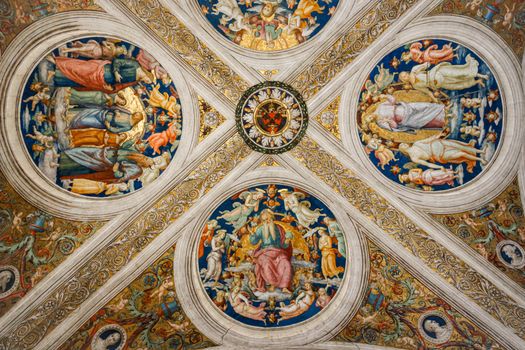 Photo: Magda Ehlers / Pexels
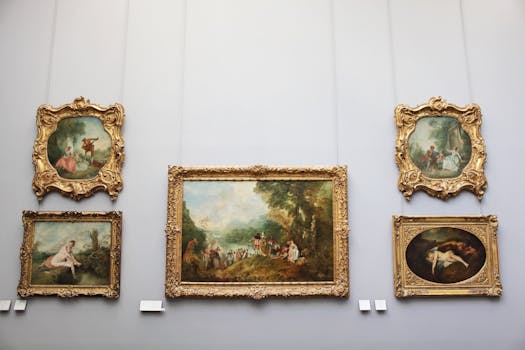 Photo: Leah Newhouse / Pexels
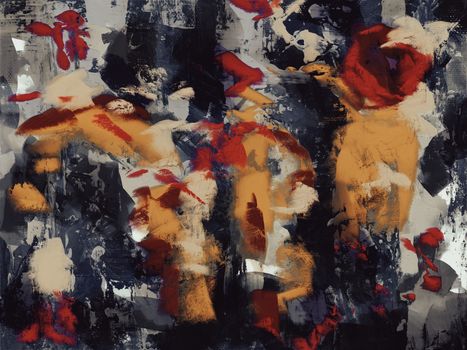 Photo: Steve A Johnson / Pexels
 Photo: Steve A Johnson / Pexels