Your Guide to an Art History Timeline Explained
Embark on an enlightening journey through the centuries, discovering the pivotal moments and masterpieces that shaped human artistic expression.
Explore the TimelineKey Takeaways
- ✓ Art history spans millennia, from prehistoric cave paintings to contemporary digital installations.
- ✓ Major art movements often reflect significant social, political, and technological changes.
- ✓ Understanding the timeline helps contextualize individual artworks and artists.
- ✓ The Western art history canon is just one perspective; global art traditions are equally rich and diverse.
How It Works
Begin your exploration with the earliest forms of human artistic expression, such as cave paintings and megalithic structures. These foundational works reveal the dawn of human creativity and symbolic thought.
Move through the monumental achievements of ancient Egypt, Greece, and Rome, understanding how art served religious, political, and social functions. Observe the development of distinct styles and architectural innovations.
Witness the spiritual intensity of medieval art, followed by the rebirth of classical ideals and humanism during the Renaissance. This period marks a profound shift in artistic focus and technique.
Delve into the revolutionary movements from Impressionism to Postmodernism, where artists continuously challenged conventions and explored new forms of expression. Understand the impact of industrialization and globalization on art.
Unraveling the Origins: Prehistoric and Ancient Art
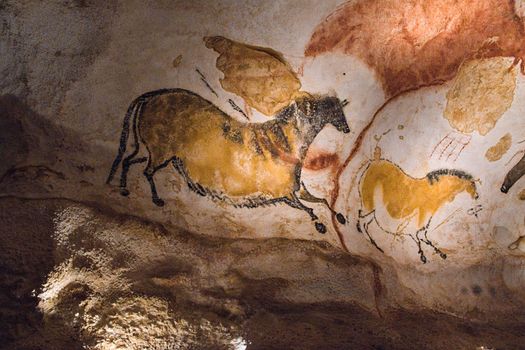 Photo: Reinhard Bruckner / Pexels
Prehistoric art, most famously exemplified by the cave paintings of Lascaux (France) and Altamira (Spain), offers a window into the minds of our earliest ancestors. These stunning depictions of animals, hunting scenes, and abstract symbols, often rendered with remarkable naturalism, suggest a deep connection to the natural world, spiritual beliefs, and perhaps even early forms of storytelling. The materials used were rudimentary – mineral pigments, charcoal, and animal fats – yet the impact is profound, demonstrating sophisticated observation and artistic skill. Beyond caves, megalithic structures like Stonehenge in England highlight early architectural prowess and communal effort, often tied to astronomical observations and ritualistic practices. These works are not merely decorative; they are vital records of nascent human culture and spiritual life.
As societies began to organize into complex civilizations, art evolved to serve new purposes. Ancient Egyptian art, spanning over 3,000 years, is characterized by its strict adherence to conventions, monumental scale, and unwavering focus on the afterlife. Hierarchical scale, composite views, and a symbolic color palette were used to depict pharaohs, gods, and daily life with an emphasis on eternity and order. Think of the pyramids, the Sphinx, and the elaborate tomb paintings – all designed to ensure the deceased's successful journey to the next world.
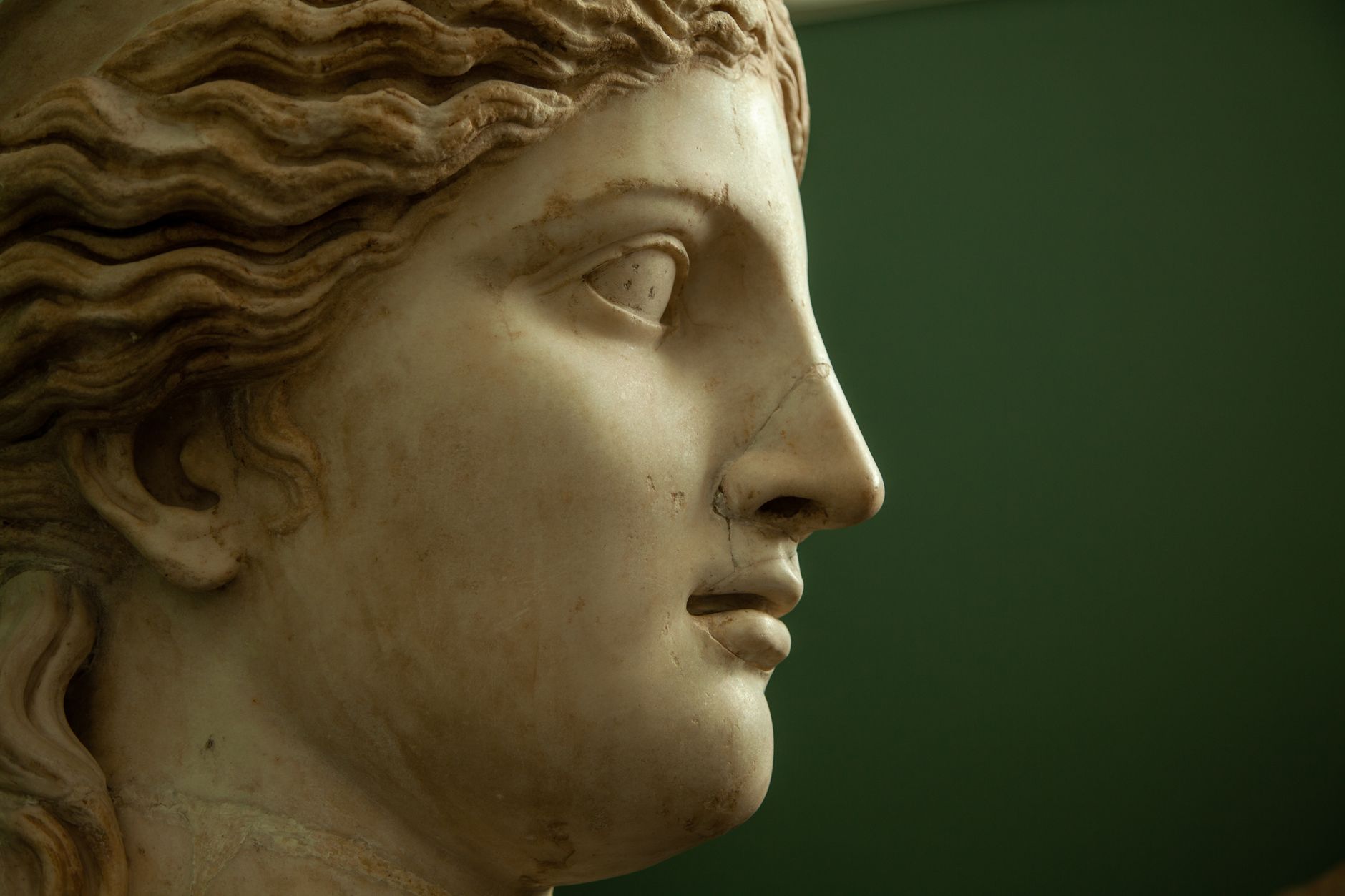
The classical civilizations of Greece and Rome then ushered in a new era of artistic innovation, shifting focus towards humanism and naturalism. Ancient Greek art, particularly sculpture, sought to capture the ideal human form, emphasizing balance, harmony, and proportion (the 'Golden Ratio'). From the archaic kouros figures to the dynamic Parthenon sculptures, Greek artists pursued perfection, influencing Western aesthetics for centuries. The Romans, while admiring Greek ideals, were more pragmatic and innovative in architecture and engineering. Their art often served to glorify the empire and its emperors, with realistic portraiture, historical reliefs (like Trajan's Column), and massive public works such as the Colosseum and aqueducts. Roman art also saw significant advancements in mosaics and frescoes, adorning villas and public spaces.
This initial phase of the art history timeline explained reveals art as a fundamental human activity, evolving from mystical expressions to sophisticated tools for religious devotion, political propaganda, and the celebration of human achievement. Understanding these origins is crucial for appreciating the continuous dialogue that art maintains with its past and the ways in which it continues to shape our understanding of the world. Each era built upon the last, either through direct influence or by reacting against established norms, setting the stage for the dramatic transformations yet to come. Discover more about ancient artistic practices and their enduring legacy.
The Spiritual and the Sublime: Medieval to Renaissance Art
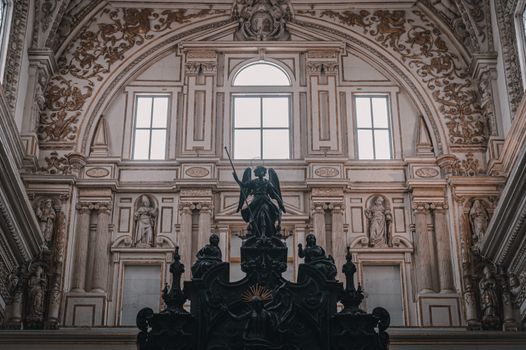 Photo: Zekai Zhu / Pexels
Romanesque art (c. 1000-1200 CE) saw the construction of massive stone churches adorned with intricate sculptural portals depicting biblical narratives, often characterized by robust, solid forms and a sense of weighty grandeur. These churches served as pilgrimage sites and fortresses of faith. The subsequent Gothic period (c. 1150-1400 CE) brought about a revolutionary change in architecture and art, most notably with the soaring cathedrals of Chartres, Notre Dame, and Reims. Characterized by pointed arches, ribbed vaults, and flying buttresses, these structures allowed for immense stained-glass windows that flooded the interiors with divine light, transforming the worship experience. Gothic sculpture became more naturalistic, with figures expressing emotion and movement, departing from the rigid forms of earlier medieval art.
The Renaissance (c. 1400-1600 CE) marked a profound 'rebirth' of classical ideals, humanism, and scientific inquiry, fundamentally altering the trajectory of Western art. Originating in Italy, this period saw artists move away from purely religious themes towards a renewed interest in human anatomy, perspective, and emotional expression. Early Renaissance masters like Giotto (whose proto-Renaissance work foreshadowed the era), Masaccio, Donatello, and Botticelli began experimenting with linear perspective, chiaroscuro (light and shadow), and anatomical accuracy, bringing a new sense of realism and dynamism to their work.
The High Renaissance (c. 1490-1527 CE) is often considered the pinnacle of this artistic revolution, dominated by titans such as Leonardo da Vinci, Michelangelo, and Raphael. Leonardo's 'Mona Lisa' and 'The Last Supper' exemplify his mastery of sfumato and psychological depth. Michelangelo's 'David' and the Sistine Chapel ceiling demonstrate unparalleled anatomical knowledge and dramatic storytelling. Raphael's frescoes, like 'The School of Athens,' celebrated classical philosophy and harmonious composition. Venetian masters like Titian, Giorgione, and Veronese, on the other hand, pioneered rich color palettes and atmospheric effects, moving towards a more sensual and painterly approach.
The Renaissance was not just a stylistic shift; it was a conceptual revolution. Artists were elevated from skilled craftsmen to intellectual figures, and art became a powerful tool for exploring human experience, scientific understanding, and spiritual devotion in a new light. This period set the stage for subsequent movements, establishing principles of composition, perspective, and realism that would be both embraced and challenged for centuries to come. It was a golden age of creativity that continues to captivate and inspire.
The Northern Renaissance, occurring concurrently in regions like the Netherlands and Germany, featured artists like Jan van Eyck and Albrecht Dürer, who excelled in oil painting, intricate detail, and often focused on domestic scenes and meticulous realism, offering a distinct but equally profound contribution to this transformative era.
From Grandeur to Revolution: Baroque, Rococo, and Neoclassicism
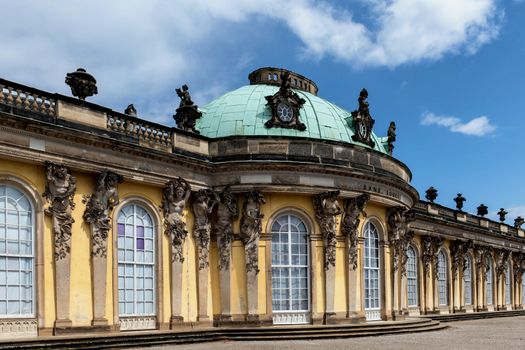 Photo: Wolfgang Weiser / Pexels
In painting, Peter Paul Rubens's robust figures and dynamic compositions embodied the opulence of the era, while Rembrandt van Rijn, in the Dutch Golden Age, explored psychological depth and the subtleties of light in his portraits and genre scenes. The Baroque extended into architecture, creating magnificent palaces like Versailles, designed to project the absolute power of monarchs. This period was about overwhelming the senses and inspiring awe, marking a significant departure from the rational balance of the Renaissance.
Following the grandeur of the Baroque, the Rococo period (c. 1730-1780 CE) emerged, primarily in France, as a lighter, more playful, and intimate style. Rococo art was characterized by delicate ornamentation, pastel colors, curvilinear forms, and themes of love, leisure, and aristocratic pleasure. Artists like Jean-Antoine Watteau, François Boucher, and Jean-Honoré Fragonard created idyllic scenes of fêtes galantes (outdoor festivals) and mythological narratives that catered to the refined tastes of the French aristocracy. While charming and elegant, Rococo was often seen as superficial and decadent, contrasting sharply with the moral seriousness that would soon follow.
The late 18th century witnessed the rise of Neoclassicism (c. 1750-1850 CE), a movement that reacted against the perceived excesses of Rococo and drew inspiration from the classical art and culture of ancient Greece and Rome. Fueled by the Enlightenment's emphasis on reason, order, and civic virtue, and the rediscovery of Pompeii and Herculaneum, Neoclassicism advocated for clear lines, noble simplicity, and moralizing themes. Jacques-Louis David became the quintessential Neoclassical painter, with works like 'The Oath of the Horatii' embodying stoicism, patriotism, and self-sacrifice. Antonio Canova's sculptures, such as 'Paolina Borghese as Venus Victrix,' revived the idealized forms of classical antiquity.
Neoclassicism was not just an artistic style; it was deeply intertwined with revolutionary ideals, particularly the American and French Revolutions. It provided a visual language for the new republics, emphasizing rationality, democracy, and heroic virtue. This period represents a swing back towards clarity and purpose after the emotional extravagance of the Baroque and the frivolousness of the Rococo, setting the stage for the dramatic shifts and challenges to tradition that would characterize the 19th century and beyond. Explore the intricate details of 18th-century art and its socio-political context.
Navigating the Modern Labyrinth: From Impressionism to Contemporary Art
 Photo: Landiva Weber / Pexels
It all began with Romanticism (c. 1800-1850), a reaction against the cold rationality of Neoclassicism, emphasizing emotion, individualism, the sublime in nature, and the dramatic. Artists like Eugène Delacroix ('Liberty Leading the People') and J.M.W. Turner showcased intense feeling and vivid color. Realism (c. 1840-1880), led by Gustave Courbet, then sought to depict ordinary life and social issues with unflinching honesty, often challenging academic conventions.
Impressionism (c. 1870-1890) marked a radical break, as artists like Claude Monet, Pierre-Auguste Renoir, and Edgar Degas focused on capturing fleeting moments, the effects of light and color, and subjective perception rather than precise detail. Their loose brushstrokes and vibrant palettes were initially scorned but eventually revolutionized painting. Post-Impressionism (c. 1886-1905), featuring Vincent van Gogh, Paul Cézanne, Paul Gauguin, and Georges Seurat, built upon Impressionist innovations but introduced greater emotional expression, symbolic meaning, and structural rigor.
The early 20th century unleashed a torrent of avant-garde movements. Fauvism (Henri Matisse) championed bold, non-naturalistic color. Cubism (Pablo Picasso, Georges Braque) shattered traditional perspective, representing objects from multiple viewpoints simultaneously. Expressionism (Ernst Ludwig Kirchner, Edvard Munch) distorted reality to convey inner emotion. Surrealism (Salvador Dalí, René Magritte) explored the subconscious mind and dream imagery, influenced by Freudian psychoanalysis.
After World War II, abstract art gained prominence, with Abstract Expressionism (Jackson Pollock, Mark Rothko) in America emphasizing gestural brushwork and emotional intensity. Pop Art (Andy Warhol, Roy Lichtenstein) reacted against Abstract Expressionism by incorporating commercial imagery and popular culture. Minimalism stripped art down to its essential forms, while Conceptual Art prioritized ideas over aesthetics.
Contemporary art, from the late 20th century to today, is characterized by its diversity, pluralism, and global reach. It defies easy categorization, encompassing a vast array of media, techniques, and themes, often engaging with social, political, and environmental issues. Performance art, installation art, video art, and digital art have all emerged as significant forms. Artists like Marina Abramović, Ai Weiwei, and Olafur Eliasson continue to push boundaries, reflecting our complex and ever-changing world. This period emphasizes that art is not static; it is a continuous dialogue, a mirror of humanity's ongoing evolution, and an endless source of inquiry and expression. The modern labyrinth of art history serves as a testament to the boundless creativity and critical spirit of the human race.
Comparison
| Era/Movement | Key Characteristics | Dominant Mediums | Notable Artists |
|---|---|---|---|
| Prehistoric | Symbolic, spiritual, naturalistic depictions | Cave painting, sculpture (Venus figurines) | Unknown (Lascaux, Altamira artists) |
| Ancient Greek | Idealized human form, balance, harmony | Sculpture, architecture, pottery | Phidias, Praxiteles |
| Renaissance | Humanism, perspective, realism, classical revival | Fresco, oil painting, sculpture | Leonardo da Vinci, Michelangelo, Raphael |
| Baroque | Drama, emotion, grandeur, theatricality | Oil painting, sculpture, elaborate architecture | Caravaggio, Bernini, Rubens |
| Impressionism | Light, color, subjective perception, fleeting moments | Oil painting (plein air) | Monet, Renoir, Degas |
| Cubism | Multiple viewpoints, geometric forms, fractured reality | Oil painting, collage | Picasso, Braque |
| Contemporary | Diversity, conceptual, global, multimedia | Installation, video, digital, performance | Ai Weiwei, Marina Abramović, Jeff Koons |
What Readers Say
"This art history timeline explained everything so clearly! I always felt overwhelmed by art history, but this guide breaks it down into manageable, fascinating sections. It's truly a reader-first approach."
Sarah J. · Austin, TX"As an aspiring art enthusiast, this article provided the perfect framework for understanding art's evolution. The connections between movements are so well articulated, making complex concepts easy to grasp."
Mark D. · New York, NY"Thanks to this comprehensive art history timeline explained, I finally understand the progression from ancient to modern art. My visits to museums are now infinitely more rewarding, as I can contextualize everything I see."
Elena R. · San Francisco, CA"A very thorough and insightful overview. While I would have loved even more detail on specific non-Western art forms, the coverage of Western art history is exceptional and incredibly helpful for a broad understanding."
David L. · Chicago, IL"This resource is a goldmine for anyone studying art or just curious. The way the eras flow into one another, reflecting societal changes, makes the art history timeline explained not just educational but also deeply engaging."
Olivia K. · Miami, FLFrequently Asked Questions
What is the importance of understanding an art history timeline explained?
Understanding an art history timeline is crucial because it provides context for individual artworks and movements. It helps us see how art reflects and influences its historical, cultural, and social environments, allowing for a deeper appreciation and interpretation of human creativity across centuries.
Is Western art history the only art history?
No, absolutely not. While much of the common discourse focuses on Western art, global art traditions from Africa, Asia, Oceania, and the Americas are incredibly rich, diverse, and have their own unique timelines and profound significance. This article focuses on a prominent Western art history timeline explained for foundational understanding, but encourages further exploration of global artistic heritage.
How can I remember all these different art movements and periods?
The best way to remember them is to focus on key characteristics, representative artists, and the historical context for each movement. Try to identify the 'big picture' shifts – for example, the move from spiritual focus to humanism, or from realism to abstraction – rather than memorizing every single detail. Visual aids, timelines, and visiting museums also greatly help solidify your understanding.
Is it worth learning art history if I'm not an artist?
Absolutely! Art history is not just for artists. It's a lens through which to understand human civilization, philosophy, religion, politics, and technology. It sharpens your critical thinking, enhances cultural literacy, and allows you to connect with human experiences across time, enriching your life in countless ways.
How does technology influence art history?
Technology has profoundly influenced art throughout history, from the development of new pigments and tools in ancient times to the invention of photography, cinema, and digital media in modern eras. Each technological leap has opened new possibilities for artistic expression, changing how art is created, disseminated, and experienced, and continues to shape contemporary art forms.
Who should use an art history timeline explained?
Anyone with an interest in culture, history, or visual arts can benefit from an art history timeline explained. It's ideal for students, educators, museum-goers, aspiring artists, or simply curious individuals who wish to deepen their appreciation for the vast and varied world of human artistic achievement.
Are there any common misconceptions about art history?
One common misconception is that art always progresses linearly, with each new movement being 'better' than the last. In reality, art history is cyclical, with revivals, reactions, and parallel developments. Another is that art is purely subjective; while personal interpretation is vital, art also operates within historical and cultural frameworks that provide objective meaning and context.
What are the future trends in art history and art itself?
Future trends in art history will likely continue to embrace a more global perspective, integrating diverse traditions and decolonizing the canon. In art itself, we can expect continued exploration of digital media, AI, virtual and augmented reality, and art that directly addresses pressing global issues like climate change, social justice, and identity, pushing the boundaries of what art can be.
Embark on your own journey through human creativity. Dive deeper into each era, discover masterpieces, and let this art history timeline explained enrich your understanding of the world and the timeless power of artistic expression.